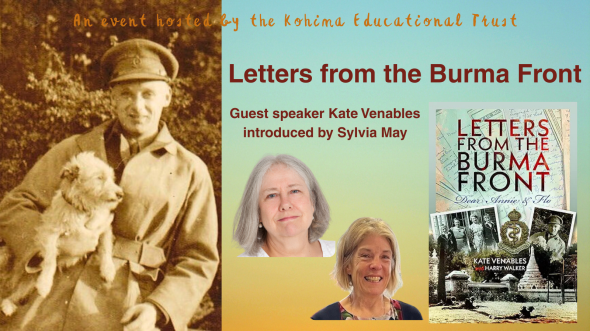
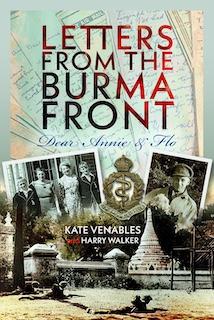
Harry Walker, Kate’s father, was born in Middlesbrough and qualified as a doctor in 1942. From 1943 to 1946 he served in the Fifth Indian Mobile Surgical Unit, close behind the fighting front. The book, on which this talk is based, contextualises his letters to family friends, sisters Annie and Flo Egerton, in a researched social and military history which simplifies an often complex war situation. It is generously illustrated with images from the family collection as well as from public archives.
The letters were written in tents, bunkers, and abandoned buildings. As well as Allied soldiers, Harry treated Japanese prisoners, escaped Allied prisoners-of-war, and Javanese civilians. In the quiet times between surges of casualties, he wrote about the government’s conduct of the war and what the world might be like afterwards, about books, the vagaries of the mail, and the quality of cigarettes. The interactions with Annie and Flo created a grounded and familiar world away from the mud and blood, where he was a boy again.
After the war Harry became a consultant anaesthetist in the Teesside group of hospitals. He died in 1959, at the age of forty.
The recording of the talk is now available to view and Kate's book Letters from the Burma Front is available via the KET shop:
Speakers:
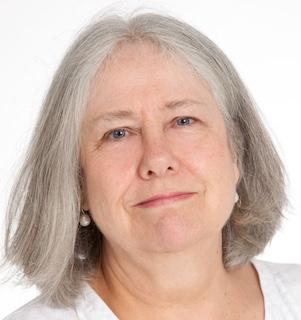
Kate Venables is a retired medical academic at the University of Oxford where she specialised in epidemiology. She has used the life histories, letters and memoirs of individual doctors, and others, to explore the experience of ordinary people during WW2 in a series of articles in the history and life-writing press. Her website is at katevenableswriting.wordpress.com.

Sylvia May - Managing Trustee of The Kohima Educational Trust Sylvia May was born in New Jersey, USA in 1957. Her parents moved to England in 1963. Educated at High Wycombe School for Girls, she decided to pursue a career in the world of books. Sylvia worked for HarperCollins for 37 years, the last eleven of which she headed up their UK-based International Sales team. Sylvia May is the daughter of the late Gordon Graham, Founder and President of the Kohima Educational Trust. She is proud that her father has inspired many people to share his vision to commemorate those who fought and died in Kohima, and the wonderful Naga people who have done so much for the British in the past. She first visited India in 1994 with her husband Robert, and has returned on numerous occasions, staying in Kohima several times. In 2000, they followed the WWII route of the Queen's Own Cameron Highlanders, her father’s regiment. The regiment’s first main engagement in this theatre of war was at Zubza shortly before the Battle of Kohima.